In the parish archives of San Martino in Badia, a hitherto unknown letter of indulgence from 1500 was discovered. It refers to the chapel of Sant’Antonio Abate in Antermoia, once an important filial church. The letter grants 100 days of indulgence to those who visit the chapel on certain feast days, go to confession or make a donation. The aim was to strengthen the chapel as a spiritual centre and secure its financial basis.
The letter of indulgence was issued by two cardinals and drafted by the papal notary Hieronymus Salvius in cursive Latin with numerous abbreviations. As part of a research project of the Museum Ladin Ciastel de Tor in San Martino in Badia, the linguist Giovanni Mischí, head of ethnological and cultural research at the museum, scientifically analysed the letter for the first time, transcribing, translating and analysing it. He also documented its simple exterior, its state of preservation and the remains of the seals. ‘The rediscovery of the 1500s letter of indulgence is of great importance for Val Badia, as it offers new insights into the religious practice and spiritual life of the region in the late Middle Ages, while at the same time helping to document and preserve the cultural heritage associated with the chapel of St Antony in Antermoia,’ Mischí emphasises.
In the late Middle Ages, letters of indulgence were considered a way to mitigate temporal punishments for sins (those that could be atoned for in purgatory or on earth), a practice that later came under criticism during the Reformation. In a modified, non-commercial form, indulgences continue to exist today.
A letter of indulgence from 1500 rediscovered
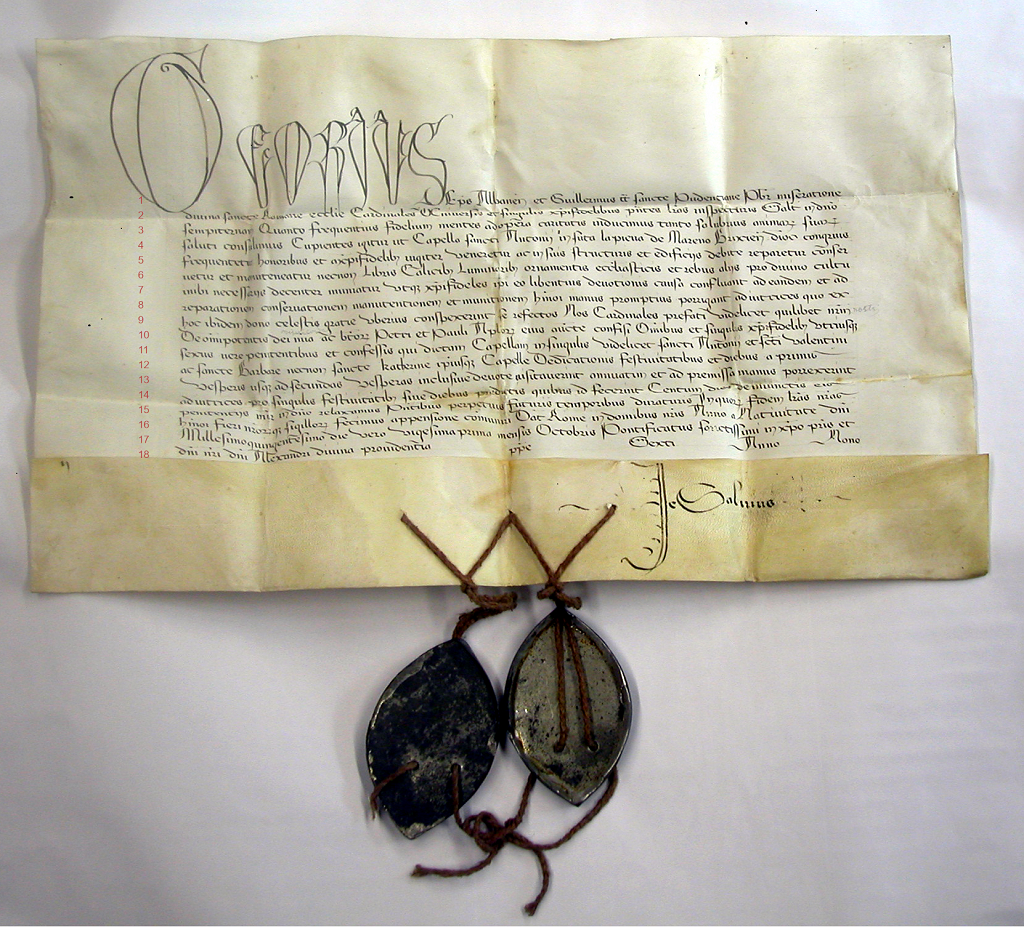
A letter of indulgence from 1500 was discovered in San Martino in Badia that refers to the chapel of St. Anthony in Antermoia. It grants 100 days of indulgence to those who visit the chapel on certain feast days or make donations. The document has been scientifically studied by the Museum Ladin.
More news
The Museum Ladin and the Pulk creative space in Trento are organising a cooking course for traditional Ladin recipes for the 9th of April. In Italian language.
The Museum Ladin holds a document with which Franz Joseph I of Austria elevated the lawyer and civil servant Johann Baptist Rinna from San Ciascian/San Cassiano to the nobility in 1812. It was found twenty years ago in a rubbish dump in Vienna. The wax hanging seal, only fragments of which remain, has now been restored.
He was an important academic and pioneer of Ladin language research and inspired Robert Musil to create the character of Christian Moosbrugger in the novel ‘Der Mann ohne Eigenschaften’: Johann Baptist Alton (1845-1900) is being honoured this year – on the 125th anniversary of his death – by the Museum Ladin Ciastel de Tor.
Das Museum Ladin Ciastel de Tor sucht im Rahmen des Forschungsprojekts „Die Ladiner des Gadertales, gestern und heute. Der Einfluss der sozialökonomischen Entwicklung auf die Bewohner und auf dem Gebiet“ eine/n wissenschaftliche/n Mitarbeiter/in.
The largest mass extinction in the history of the earth and the parallels to today’s climate crisis are the subject of a new exhibition at the Museum Ladin Ciastel de Tor. The exhibition will be presented on the 14th June.